before 1900 and continuing into adulthood
The Brothers’ Ranch Partnership
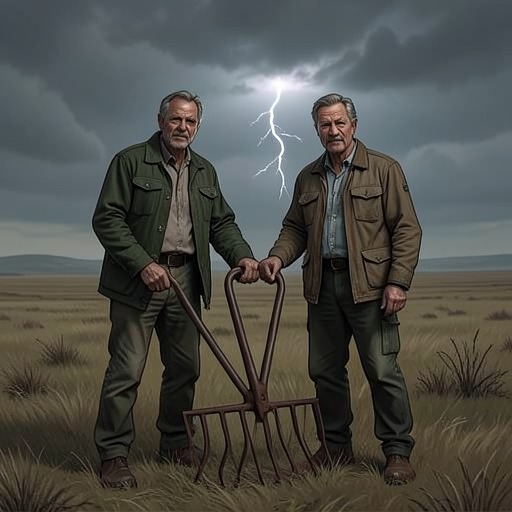
Phil Burbank and [George Burbank](entity:character-recall-character-george-burbank-1461e68d708a) grow up together on their family’s [Montana](entity:location-recall-location-montana-a4c636ab2f04) ranch and become both brothers and business partners. Their differences are already pronounced: Phil is brilliant, forceful, and hungry to dominate, while George is steady, quiet, and tender toward other people.
They keep the habits of childhood well into middle age, including sharing a bedroom and making the ranch’s decisions together. Their closeness gives Phil a deep sense of ownership over their life as a pair, making George’s eventual marriage feel like a rupture.
during Phil’s youth and early adulthood
Phil’s Bond with Bronco Henry
[Bronco Henry](entity:character-recall-character-bronco-henry-a322d8136cee) teaches Phil Burbank to ride, rope, and braid rawhide, becoming the ideal against which Phil measures every later cowboy. Phil’s admiration is more than professional: his memories carry a longing and intimacy he never speaks about openly.
Bronco Henry dies in a riding accident while the young Phil watches from the corral rail. The loss becomes one of Phil’s defining private wounds, and the old cowboy’s lessons later provide the language Phil uses to draw [Peter Gordon](entity:character-recall-character-peter-gordon-1f94f0f7a958) into his confidence.
1900
The First Roundup Journey
Phil Burbank and [George Burbank](entity:character-recall-character-george-burbank-1461e68d708a) make their first round trip driving cattle together in [1900](entity:time-recall-time-1900-a6b17cfe5ca2). Years later, Phil remembers the date as the beginning of a long shared history, while George has little interest in marking the anniversary.
Their mismatch is already visible in the way they remember and speak: Phil turns the past into stories and tests George with teasing, while George stays focused on the work ahead. That contrast will sharpen as their lives begin to diverge.
during Phil’s first year at college
Phil Rejects the Fraternity
At college, Phil Burbank recognizes that fraternities court him for the money attached to his family name. At a formal dinner, he tells the assembled students that their attention is an insult because they do not know him and want his wealth.
He leaves without joining, turning a social ritual into a public accusation. His contempt for class performance and his willingness to wound others give his younger brother an early example of Phil’s power to define the room.
two years after Phil’s college entrance
George’s College Rejection
When [George Burbank](entity:character-recall-character-george-burbank-1461e68d708a) arrives at college, he waits in his room for fraternity men who never come. He has bought fashionable clothes and prepared himself to be welcomed, but the corridor eventually falls silent.
Phil later suggests that the students remembered his own dramatic departure and that George was not at fault. George never accepts that explanation; the humiliation joins his private store of hurts and helps explain why he rarely challenges Phil directly.
years before Peter’s birth
Johnny Meets Rose
In Chicago, young doctor [Johnny Gordon](entity:character-recall-character-johnny-gordon-ce9c46f64102) escapes the strain of his hospital work by going to the moving pictures. He meets Rose Wilson, a pianist whose warmth, smile, and love of flowers answer the romantic ideal he has built around Mary Pickford.
Johnny courts Rose with flowers and a trip to a carnival, and the two marry after a brief courtship. His confidence is fragile, but he believes that love may give his life direction and make him a better doctor.
after Johnny and Rose marry
The Gordons Settle in Beech
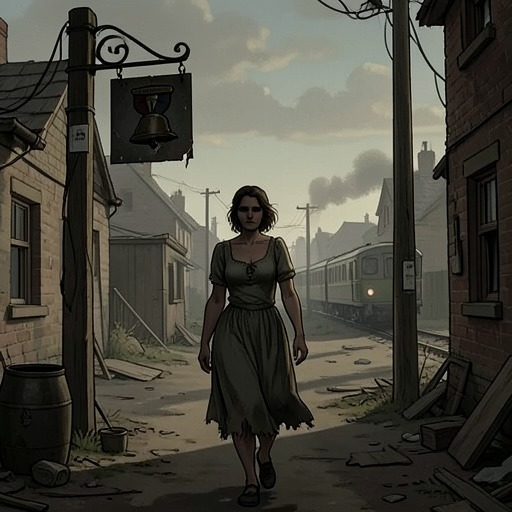
Unable to secure a lasting hospital post, [Johnny Gordon](entity:character-recall-character-johnny-gordon-ce9c46f64102) follows advice to establish himself in a small town. He and Rose take over the abandoned Inn in [Beech](entity:location-recall-location-beech-8cf395181da0), intending to run it while Johnny builds a medical practice.
The windmill behind the building turns without doing useful work, and the remote town offers little of the promise Johnny imagined. Still, the couple make the place clean and welcoming, planting flowers and trying to build a home against the wind and isolation.
a few years after the Gordons settle in Beech
Peter’s Birth
[Johnny Gordon](entity:character-recall-character-johnny-gordon-ce9c46f64102) delivers his own son, [Peter Gordon](entity:character-recall-character-peter-gordon-1f94f0f7a958), and the parents give the child the name of Rose’s father. Johnny is overwhelmed by the sight of Rose nursing the baby and imagines the life [Peter](entity:character-recall-character-peter-22e18a2305ec) might have ahead of him.
The tenderness of the beginning contrasts with the uncertainty that follows. Peter’s difficult early development and repeated illnesses will make his parents fear for him while also revealing his unusual attention and reserve.
Peter’s early childhood in Beech
Peter’s Unusual Childhood
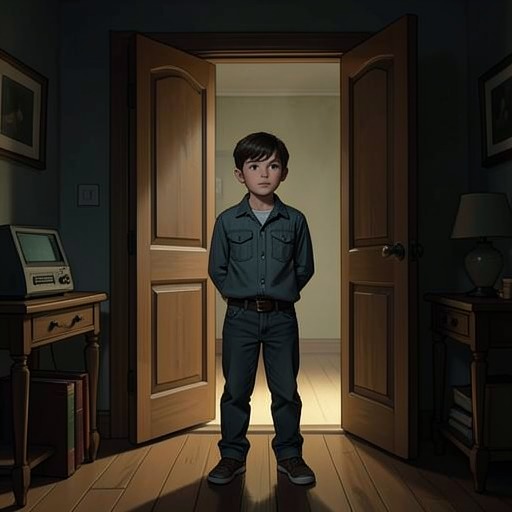
[Peter Gordon](entity:character-recall-character-peter-gordon-1f94f0f7a958) walks and talks late, then speaks in measured, adult cadences. Frail and averse to sunlight, he prefers books and solitude to games, and sometimes leaves the house at night to watch the moon beside the river.
[Johnny Gordon](entity:character-recall-character-johnny-gordon-ce9c46f64102) finds [Peter](entity:character-recall-character-peter-22e18a2305ec) there but does not press him to explain the private world he seems to inhabit. Peter’s stillness and observant nature unsettle his parents, yet Johnny also recognizes in his son an intelligence that might carry him far beyond [Beech](entity:location-recall-location-beech-8cf395181da0).
Peter’s school years in Beech
Schoolyard Persecution
At school, [Peter Gordon](entity:character-recall-character-peter-gordon-1f94f0f7a958) is taunted as a sissy and mocked for his manner and interests. The insults hurt most when the boys call his father a drunk; [Peter](entity:character-recall-character-peter-22e18a2305ec) lunges once, then recognizes that he must oppose them on his own terms rather than theirs.
His response is not reconciliation but a cold, controlled hatred of those who threaten his private image of his family. The experience strengthens the distance between Peter and the people who regard him as weak.
during Peter’s childhood
Peter’s Book of Dreams
[Peter Gordon](entity:character-recall-character-peter-gordon-1f94f0f7a958) begins cutting pictures from magazines and pasting them into a scrapbook. He chooses images of wealth, travel, elegant houses, and fashionable life, arranging them around figures that remind him of his parents.
The scrapbook becomes a private blueprint for a future in which he will be a great surgeon and his mother will be admired and secure. It is an early sign of [Peter](entity:character-recall-character-peter-22e18a2305ec)’s ability to turn observation into a plan, and of how fiercely he protects the people he loves in his imagination.
during Peter’s childhood
Alma Arrives in Beech
[Alma](entity:character-recall-character-alma-8e0abbf6966f), a sick and troubled former prostitute, is sent from [Herndon](entity:location-recall-location-herndon-1a8f8bb4d781) to [Beech](entity:location-recall-location-beech-8cf395181da0) after her former employer notices her declining health. [Johnny Gordon](entity:character-recall-character-johnny-gordon-ce9c46f64102) recognizes that her condition is not consumption and tells her she should stop working and avoid contact with others.
Rose prepares a room for Alma at the Inn despite the stigma attached to taking her in. Johnny’s care reflects his natural kindness, though the town’s later gossip will turn the Inn into a place marked by Alma’s death.
after Alma’s death
The Inn Becomes a Restaurant
After [Alma](entity:character-recall-character-alma-8e0abbf6966f) dies at the Inn, people in [Beech](entity:location-recall-location-beech-8cf395181da0) and [Herndon](entity:location-recall-location-herndon-1a8f8bb4d781) call the building the Whorehouse Inn. Rose and Johnny endure the social judgment while keeping the establishment clean and gradually turning it into an eating house.
The stigma makes business difficult, so the family depends on travelers and occasional ranch customers. Rose’s work gives the Gordons a livelihood but leaves them vulnerable to the town’s contempt and to the financial insecurity Johnny never manages to escape.
when Peter is about twelve
Peter’s Medical Studies
[Peter Gordon](entity:character-recall-character-peter-gordon-1f94f0f7a958) reads avidly in the medical books [Johnny Gordon](entity:character-recall-character-johnny-gordon-ce9c46f64102) has acquired, including material his father once received but never opened. He studies anatomy and medicine alongside other difficult texts, and Johnny imagines that his son may achieve what he could not.
Johnny’s pride turns [Peter](entity:character-recall-character-peter-22e18a2305ec)’s studies into a promise of escape from the family’s circumstances. The books also pass down a practical knowledge that will later become central to the novel’s final turn.
before the First World War
Johnny’s Drinking and Public Humiliation
[Johnny Gordon](entity:character-recall-character-johnny-gordon-ce9c46f64102) sometimes drinks in the [Beech](entity:location-recall-location-beech-8cf395181da0) saloon and, when intoxicated, tries to claim the standing of the ranchers through talk of politics, education, and Europe. His speech grows slurred, and people regard him with a mixture of pity and amusement.
His drinking makes him an easy target in a community that measures men by strength and confidence. Rose tries to manage his drinking and protect the family, while [Peter](entity:character-recall-character-peter-22e18a2305ec) becomes increasingly aware of the contempt directed at his father.
after Alma’s illness becomes severe
Johnny Takes Alma In
As [Alma](entity:character-recall-character-alma-8e0abbf6966f) becomes too ill to remain at her room in [Beech](entity:location-recall-location-beech-8cf395181da0), [Johnny Gordon](entity:character-recall-character-johnny-gordon-ce9c46f64102) argues that she should be allowed to die somewhere more humane. Rose agrees and prepares a room for her at the Inn, despite the cost to the family’s reputation.
Their decision offers Alma a measure of care in her final days. It also exposes the distance between Johnny’s compassion and the harsher social codes of the town, where people judge Rose for welcoming a vulnerable woman.
when Peter is about twelve
The Fight in the Saloon
In the [Beech](entity:location-recall-location-beech-8cf395181da0) saloon, [Johnny Gordon](entity:character-recall-character-johnny-gordon-ce9c46f64102) praises [Peter](entity:character-recall-character-peter-22e18a2305ec)’s intelligence and talks about his hope that his son will become a surgeon. A rancher ridicules the paper flowers Peter makes and calls both father and son degrading names.
Johnny lunges to defend Peter, but the rancher grabs him and throws him against a wall. The public humiliation leaves Johnny unable to bear his own weakness and turns a cruel insult into a crisis for the family.
the day after the saloon fight
Johnny’s Withdrawal
After the fight, [Johnny Gordon](entity:character-recall-character-johnny-gordon-ce9c46f64102) admits to Rose that he had wanted [Peter](entity:character-recall-character-peter-22e18a2305ec) to see him as a good fighter. He recognizes that the shame came not from protecting his son but from having been defeated in front of the men who watched.
He refuses the drink Rose offers, and later turns away from food and conversation. Peter brings him detailed drawings of plant roots, hoping to show his love, but Johnny reads the gift as pity and sinks further into despair.
roughly a year after the saloon fight
Johnny’s Farewell to Peter
[Johnny Gordon](entity:character-recall-character-johnny-gordon-ce9c46f64102) stops drinking and grows increasingly withdrawn. One evening he speaks privately with [Peter](entity:character-recall-character-peter-22e18a2305ec), tells him that he loves him, and urges him not to become hard in response to other people’s cruelty.
He defines kindness as trying to remove obstacles for those who love or need someone. Peter tells his father that he loves him too, but their closeness does not prevent the coming tragedy.
late fall, after his final visit to the hills
Johnny’s Suicide
After returning from delivering a dead child, [Johnny Gordon](entity:character-recall-character-johnny-gordon-ce9c46f64102) reflects on the dispossession of the Indigenous people he has seen driven from the valley. He goes upstairs and hangs himself from a rope kept by the window for escape in case of fire.
His suicide ends the life of a man who could not reconcile kindness with the powerlessness he felt in the world around him. Rose and [Peter](entity:character-recall-character-peter-22e18a2305ec) are left to carry the consequences of his despair and the town’s version of his story.
the night of Johnny’s suicide
Peter Finds His Father
[Peter Gordon](entity:character-recall-character-peter-gordon-1f94f0f7a958) hears a noise upstairs and finds that [Johnny Gordon](entity:character-recall-character-johnny-gordon-ce9c46f64102) has hanged himself. He cuts his father down, then faces his mother in the kitchen without telling her what he has just done.
The scene closes [Peter](entity:character-recall-character-peter-22e18a2305ec)’s childhood with a secret act of grim competence. He is still a boy, but already accustomed to keeping knowledge from others and managing what they cannot bear to see.
the years after Johnny’s death
Rose Keeps the Red Mill Open
Rose Gordon continues to operate the Inn, now known as the Red Mill, as an eating house. Though the suicide becomes local gossip and rumor, passing travelers and later customers begin to visit for her food and hospitality.
[Peter](entity:character-recall-character-peter-22e18a2305ec) helps raise and kill the chickens, while Rose cannot bear to watch the killing. Their work sustains them, but the memory of Johnny and the family’s precarious place in town remain close beneath the restaurant’s growing reputation.
several years after Johnny’s death
George Visits the Red Mill
During a cattle drive into [Beech](entity:location-recall-location-beech-8cf395181da0), [George Burbank](entity:character-recall-character-george-burbank-1461e68d708a) and the ranch hands eat at Rose’s restaurant. Phil Burbank mocks [Peter](entity:character-recall-character-peter-22e18a2305ec)’s paper flowers and needles the boy with a deliberately insulting joke; George notices that Rose has been hurt by it.
After the meal, George stays behind to settle the bill and finds Rose crying. He offers to pay later if she sends him an account, and his awkward kindness begins an attachment that neither of them had expected.
a few weeks after George’s first visit
George Serves the Noisy Guests
[George Burbank](entity:character-recall-character-george-burbank-1461e68d708a) returns to the Red Mill while Rose is busy preparing food for a loud party from [Herndon](entity:location-recall-location-herndon-1a8f8bb4d781). When the guests become rowdy and Rose worries about serving them, George volunteers to carry in their salad.
His unexpected entrance silences the room, and Rose later laughs at how completely he unsettled the party. George discovers that he can make her laugh and that her company gives him a happiness he had not known how to seek.
the winter after the cattle-drive visit
George Courts and Marries Rose
[George Burbank](entity:character-recall-character-george-burbank-1461e68d708a) begins visiting Rose regularly and eventually asks her to marry him. Rose worries that she may not be able to love twice and insists that she can support [Peter](entity:character-recall-character-peter-22e18a2305ec) herself, but George offers help whether or not she accepts his proposal.
Rose agrees, and they marry privately in [Herndon](entity:location-recall-location-herndon-1a8f8bb4d781) after [Christmas](entity:time-recall-time-christmas-a573265d0167), with Peter as the only guest. Peter welcomes the marriage as a way for his mother to gain security, though he remains emotionally separate from the new household George is creating.
winter after the wedding
Rose Moves to the Ranch
[Rose Gordon Burbank](entity:character-recall-character-rose-gordon-burbank-cea01436c46e) moves into [Burbank Ranch](entity:location-recall-location-burbank-ranch-fa3959f6b91a), while [Peter Gordon](entity:character-recall-character-peter-gordon-1f94f0f7a958) remains in [Herndon](entity:location-recall-location-herndon-1a8f8bb4d781) to finish the school year. When Rose first meets Phil Burbank in the house, he tells her bluntly that he is not her brother.
Phil’s contempt begins at once, and his refusal to welcome her leaves Rose frightened and unsure how much power she can claim in her new home. George tries to soften the arrival, but he does not see how directly Phil’s hostility has landed.
the first days after Rose arrives
The Brothers’ Shared Room
Phil Burbank interprets Rose’s presence as an attempt to separate [George Burbank](entity:character-recall-character-george-burbank-1461e68d708a) from him and take hold of the family’s wealth. He uses small acts of neglect and humiliation, from leaving his appearance deliberately rough to refusing ordinary courtesies, to make clear that she is unwelcome.
Phil also resents the closed bathroom door and the couple’s privacy. Rose’s arrival threatens not only his authority in the house but the old pattern of intimacy and routine on which he has built his life with George.
the first winter of George and Rose’s marriage
The Winter Picnic
On a drive to [Herndon](entity:location-recall-location-herndon-1a8f8bb4d781), [George Burbank](entity:character-recall-character-george-burbank-1461e68d708a) surprises Rose with a roadside picnic of hot coffee and sandwiches. He tells her that he used to hide in a restaurant booth rather than eat alone, and admits how much he enjoys being with her.
Rose’s laughter and affection draw George out of his habitual silence. The small excursion becomes proof that their marriage contains real companionship, not merely the security and money Phil assumes Rose wanted.
during the first winter of the marriage
George Buys Rose a Piano
Wanting Rose to have a life beyond the ranch routine, [George Burbank](entity:character-recall-character-george-burbank-1461e68d708a) orders a [Mason & Hamlin piano](entity:object-recall-object-mason-hamlin-79abbdcdec7a). He hopes she will play for him and, eventually, for the governor and his wife.
The piano’s arrival is difficult and nearly injures one of the men helping unload it. Rose begins practicing, but Phil Burbank mocks her mistakes by playing the same pieces better on his banjo whenever she starts.
before the governor’s visit
Rose’s Floral Arrangement
As [Rose Gordon Burbank](entity:character-recall-character-rose-gordon-burbank-cea01436c46e) struggles to recover a sense of herself, she makes an elaborate arrangement from tumbleweed and dried red plants gathered near the ranch. She hopes the work will please [George Burbank](entity:character-recall-character-george-burbank-1461e68d708a) and reconnect her with the flower arranging she once loved.
George appreciates the piece, but Phil Burbank studies it with a sharper eye and grudgingly recognizes its imaginative force. Rose’s ability to make beauty from discarded material briefly unsettles Phil’s certainty that he can dismiss her.
spring after George and Rose marry
The Governor’s Dinner
The governor and his wife visit [Burbank Ranch](entity:location-recall-location-burbank-ranch-fa3959f6b91a) for dinner. [George Burbank](entity:character-recall-character-george-burbank-1461e68d708a) and Rose prepare for the occasion, while Rose worries about the conversation and about Phil Burbank’s expected presence.
Phil does not appear. Without him to carry the talk, Rose feels the pressure of the evening more acutely, and the dinner becomes a test of her place in a world of wealth and social performance that she has not been trained to navigate.
during the governor’s dinner
Rose Freezes at the Piano
At the governor’s request, [Rose Gordon Burbank](entity:character-recall-character-rose-gordon-burbank-cea01436c46e) plays an easy waltz but cannot remember “[Just Like a Gypsy](entity:expression-recall-expression-just-like-a-gypsy-7986f75615fe),” the piece [George Burbank](entity:character-recall-character-george-burbank-1461e68d708a) loves. Her hands lose their feeling as she stares at Phil’s untouched place setting and imagines his judgment even though he is absent.
The guests excuse her lapse kindly, but Rose sees George’s disappointment and cannot explain what has overwhelmed her. The incident deepens her sense that Phil’s silent power has entered the room even when he is nowhere in sight.
after the governor’s dinner
Rose’s First Secret Drinking
[Rose Gordon Burbank](entity:character-recall-character-rose-gordon-burbank-cea01436c46e) begins to suffer severe headaches, often before meals, while dreading the silences and small cruelties of life with Phil Burbank. A doctor suggests that hunger may be responsible, but breakfast does not solve the problem.
Seeking relief, Rose secretly takes whiskey from the family cabinet. The drink eases her pain, and she tells herself she will not do it again, but the relief makes the hidden bottle an increasingly powerful refuge.
the summer Peter comes to the ranch
The Nappos’ Journey North
[Edward Nappo](entity:character-recall-character-edward-nappo-0486553d53c2) takes his son north from the [Indian reservation](entity:location-recall-location-fe187c5945f7) to show him the mountains and the land where the boy’s grandfather had been chief. The family has been dispossessed and confined by rules requiring permits to leave the reservation, but Edward risks the journey anyway.
The boy has grown up on stories of the ancestral country and is eager to see it for himself. Their trip carries the hope of recovering a connection to a place the family has been forced to leave behind.
during Edward Nappo’s journey north
Phil Turns the Nappos Back
Phil Burbank stops [Edward Nappo](entity:character-recall-character-edward-nappo-0486553d53c2) and his son at a heavy gate on the ranch boundary and refuses to let them pass. Edward explains that they need only to rest their old horse and offers beadworked gloves, but Phil rejects the gift and sends them back toward the reservation.
The boy watches his father turn the cart around, carrying the humiliation of being denied access to the land he has come to see. Phil feels a flicker of pity but does nothing to undo the harm.
summer after his school year in Herndon
Peter Arrives at the Ranch
[Peter Gordon](entity:character-recall-character-peter-gordon-1f94f0f7a958) comes to [Burbank Ranch](entity:location-recall-location-burbank-ranch-fa3959f6b91a) to stay with his mother for the summer. His neat clothes, careful speech, and reserved manner confirm the image of him that Phil Burbank has already mocked to the ranch hands.
Rose fears that [Peter](entity:character-recall-character-peter-22e18a2305ec) will be wounded by the same contempt she has endured. Peter, however, watches carefully and keeps his thoughts private, treating his new surroundings as a place to study rather than a place in which to confide.
early in Peter’s summer at the ranch
Peter Finds the Secret Bathing Place
While exploring, [Peter Gordon](entity:character-recall-character-peter-gordon-1f94f0f7a958) stumbles upon Phil Burbank naked at the hidden creek where Phil bathes. Phil shouts at him to leave, furious that the boy has entered the one private place he has kept sacred since youth.
[Peter](entity:character-recall-character-peter-22e18a2305ec) says nothing to his mother about what he saw, and Phil does not tell George. The encounter gives Peter knowledge of Phil’s vulnerability and establishes a secret connection between them that will later shape Phil’s approach.
early in Peter’s summer at the ranch
Peter Receives George’s Bookcase
[George Burbank](entity:character-recall-character-george-burbank-1461e68d708a) gives [Peter](entity:character-recall-character-peter-22e18a2305ec) the old bookcase from their shared room so he can store the medical books left by [Johnny Gordon](entity:character-recall-character-johnny-gordon-ce9c46f64102). Phil Burbank discovers that the case has been moved and learns that George has given it away without consulting him.
To Phil, the removal is another sign that his brother’s household is changing around him. Peter’s books now occupy a place in the brothers’ room, quietly making the past and the new family share the same space.
during Peter’s early weeks at the ranch
Phil’s Private Willows
Phil Burbank’s hidden swimming place lies among willows that have grown over a shack he and [George Burbank](entity:character-recall-character-george-burbank-1461e68d708a) built as boys. The secluded pool is the only place where Phil allows himself privacy and where he can feel briefly free of the world’s demands.
[Peter](entity:character-recall-character-peter-22e18a2305ec)’s accidental appearance there violates a boundary Phil has guarded for years. Phil’s fury is partly about exposure and partly about the boy’s intrusion into a place connected to his deepest memories.
the day Edward and his son are turned back
Rose Welcomes the Nappos
[Rose Gordon Burbank](entity:character-recall-character-rose-gordon-burbank-cea01436c46e) sees [Edward Nappo](entity:character-recall-character-edward-nappo-0486553d53c2) and his son returning from their failed journey and understands that Phil has turned them away. She runs after them and invites them to camp at the ranch, explaining that her husband knew Edward’s father.
[George Burbank](entity:character-recall-character-george-burbank-1461e68d708a) supports her invitation, even though the men are not supposed to leave the reservation. Rose’s compassion gives the boy a chance to remain near the ancestral land, and George’s decision shows that his quiet kindness can resist Phil’s authority.
the evening the Nappos camp near the ranch
Phil Confronts George
Phil Burbank finds the Nappos camped by the creek and orders [Edward Nappo](entity:character-recall-character-edward-nappo-0486553d53c2) to leave. When [George Burbank](entity:character-recall-character-george-burbank-1461e68d708a) tells him that he gave the family permission to stay, Phil challenges his brother and suggests that Rose married him for his money.
George does not retreat. He insists that the Nappos may remain, making one of the clearest breaks with Phil’s control of the ranch. Phil’s attack also exposes the suspicion that has been driving his hostility toward Rose from the beginning.
as Peter settles into ranch life
Rose’s Growing Isolation
[Rose Gordon Burbank](entity:character-recall-character-rose-gordon-burbank-cea01436c46e) tries to settle into the ranch house, but she feels increasingly alone while George is away and [Peter](entity:character-recall-character-peter-22e18a2305ec) spends his time exploring or studying. She worries that Phil’s contempt will eventually make Peter want to return to [Herndon](entity:location-recall-location-herndon-1a8f8bb4d781).
Her attempts to manage the house and create a place for herself do not ease the fear that she is an outsider. The headaches and secret drinking grow more closely tied to her dread of Phil and to the silence that surrounds her.
during the summer
Phil Begins the Rope
Phil Burbank begins braiding a [rawhide rope](entity:object-recall-object-rawhide-rope-dff4eb0b4d19) and invites [Peter Gordon](entity:character-recall-character-peter-gordon-1f94f0f7a958) to watch. He offers to teach the boy to rope and ride, presenting the work as an opportunity for friendship and for entry into the masculine ranch world [Peter](entity:character-recall-character-peter-22e18a2305ec) has been kept outside.
Phil’s kindness is strategic: he hopes to draw Peter away from Rose and make her drink more heavily. Yet his desire for the boy’s admiration also carries a private emotional force that Phil himself does not fully understand.
during haying season
Peter Endures the Camp Whistle
[George Burbank](entity:character-recall-character-george-burbank-1461e68d708a) brings Rose and [Peter](entity:character-recall-character-peter-22e18a2305ec) to the hay camp. As Peter walks past the open tents, one of the ranch hands gives him a whistle meant for a girl, a taunt encouraged by Phil’s stories about the boy.
Peter does not stop or turn back. Phil recognizes that the boy has endured the gauntlet with unusual courage and begins to imagine that Peter might be won over as a companion and protégé.
later in haying season
Peter Accepts Phil’s Friendship
Phil Burbank calls [Peter](entity:character-recall-character-peter-22e18a2305ec) over, asks him to use his first name, and promises to finish the rope for him. Peter responds politely and shows genuine interest in the rawhide work, encouraging Phil to believe that their new relationship is taking hold.
Phil plans to use the friendship to weaken Peter’s attachment to Rose, but Peter’s composure makes it difficult to know what he truly intends. Their relationship begins as a contest of interpretation beneath an appearance of trust.
during Peter’s summer at the ranch
Peter’s Conversation with Rose
Ross Gordon Buban tried to talk to [Peter](entity:character-recall-character-peter-22e18a2305ec) about his growing closeness to Phil and his feelings of loneliness. Peter spoke abstractly about distant stars and noticed that his mother had been drinking, but did not directly ask her. He told her she would not have to do it anymore, making Ross
late summer into fall
Phil Teaches Peter to Ride
Phil Burbank taught [Peter Gordon](entity:character-recall-character-peter-gordon-1f94f0f7a958) to ride a horse and gave him a gentle horse. [Peter](entity:character-recall-character-peter-22e18a2305ec) was not naturally good at riding, but Phil was satisfied with his efforts and continued to share stories about [Bronco Henry](entity:character-recall-character-bronco-henry-a322d8136cee) and the past. The time they spent together made Phil feel that this superficial friendship was becoming more
during the summer or early fall
The Rabbit Under the Poles
Phil Burbank and [Peter Gordon](entity:character-recall-character-peter-gordon-1f94f0f7a958) were working alongside a pile of sticks when they found a cottontail rabbit hiding beneath one of the sticks. The rabbit dragged one leg out and Phil told [Peter](entity:character-recall-character-peter-22e18a2305ec) to kill it quickly
after Phil and Peter grow closer
The Running Dog Revealed
Phil Burbank asked [Peter](entity:character-recall-character-peter-22e18a2305ec) what was on the distant hill. He had thought the boy would only see the scenery. Peter recognized the shape as a running dog, which Phil had always called a dog on the hill
during the autumn of Peter’s summer visit
Phil Reveals Rose’s Drinking
Phil Burbank told [Peter](entity:character-recall-character-peter-22e18a2305ec) that Rose had been drinking and described her condition as an obstacle that Peter might be able to help remove. He expected the boy to feel uneasy and to grow closer to him because of their shared concern. Peter admitted he knew his mother had changed, but said she had never drunk
later in the summer
Rose Sells the Old Hides
During George's absence, a leather merchant came to the Bank's ranch and paid to buy the old animal skins stacked near the slaughter fence. Rose was short on money and increasingly ashamed of relying on George, so she accepted thirty dollars and asked for cash. These skins were left by Phil as material for
after the hide sale
Rose’s Collapse
After receiving the money, [Rose Gordon Burbank](entity:character-recall-character-rose-gordon-burbank-cea01436c46e) reflected on how she had changed: she began to act secretly, speak lies, and depend on alcohol. She imagined how George would divorce her upon learning what she had done
before Phil becomes gravely ill
Peter Finds the Carcass
[Peter Gordon](entity:character-recall-character-peter-gordon-1f94f0f7a958) followed the ancient stone marker that Phil Burbank had mentioned, and in a dry gully, he found a dead animal. He put on gloves, handling the remains with calm and precision, as if preparing for medical work
the day Phil notices the hides are gone
Phil’s Anger Over the Hides
Phil Burbank and [Peter](entity:character-recall-character-peter-22e18a2305ec) returned to the ranch, and found that the animal skins were missing near the slaughter fence. He guessed that Rose sold the skins when she was drunk, and said George should go find her to talk about it. Peter tried to prevent Phil from using this discovery as another excuse to
immediately after Phil discovers the missing hides
Peter Gives Phil Rawhide
[Peter Gordon](entity:character-recall-character-peter-gordon-1f94f0f7a958) gave prepared raw skin to Phil Burbank and told him he wanted to learn how to tie ropes like Phil. He thanked Phil for being kind to him and placed his hand on Phil's arm. Phil saw this act as proof that [Peter](entity:character-recall-character-peter-22e18a2305ec) wanted to follow him and join him. He was moved
after Peter offers the rawhide
Phil Handles the Infected Hide
Phil Burbank finished the raw leather rope with the skin [Peter](entity:character-recall-character-peter-22e18a2305ec) gave him. His hands, having worked without gloves for many years, were already scarred and cracked. At this moment, he handled the animal skin directly with his hands. Peter knew the danger, so this act carried consequences: anthrax
the morning after the rope is completed
Phil Falls Ill
Phil Burbank came to eat breakfast late, distracted, thinking constantly of his hand. He left the table almost without drinking any coffee, and later sat alone in the blacksmith's shop, silently bathed in the morning light
the day Phil leaves the ranch
Phil’s Hospitalization
[George Burbank](entity:character-recall-character-george-burbank-1461e68d708a) took Phil Burbank to the town hospital in Hearn. The doctor could not explain his condition at first, so he sent the blood culture sample to the state hospital for analysis
a few days after his hospitalization
Phil’s Funeral
Phil Burbank died after his last seizure, and [George Burbank](entity:character-recall-character-george-burbank-1461e68d708a) arranged his funeral in Hurnden. Although many had experienced Phil's cruelty, the community remembered him as a skilled craftsman, a musician, and a friend of the ranch workers. Rose and George accompanied the family, while [Peter](entity:character-recall-character-peter-22e18a2305ec) remained
the evening after the funeral
Rose and George’s New Beginning
After the funeral, [George Burbank](entity:character-recall-character-george-burbank-1461e68d708a) and [Rose Gordon Burbank](entity:character-recall-character-rose-gordon-burbank-cea01436c46e) walked side by side under the moonlight. [Peter](entity:character-recall-character-peter-22e18a2305ec) watched them from inside the house, seeing George gently kiss his mother. In Peter's eyes, this moment marked the beginning of Rose's stable life with George, which was achieved by removing the
the day of Phil’s funeral
Peter Reads the Burial Service
While the others are at the funeral, [Peter Gordon](entity:character-recall-character-peter-gordon-1f94f0f7a958) studies the [Book of Common Prayer](entity:object-recall-object-book-of-common-prayer-89d6b73fb66a) and reads the burial service. Its language moves him because he imagines how fittingly the words might have been spoken over his father, [Johnny Gordon](entity:character-recall-character-johnny-gordon-ce9c46f64102).
The prayer book gives [Peter](entity:character-recall-character-peter-22e18a2305ec) a final image for the ending of the conflict. He later considers cutting a line from the Psalms for the last page of his scrapbook, choosing it over the rose petals he had kept from his mother’s wedding.
after Phil’s death
The Dog’s Power
[Peter Gordon](entity:character-recall-character-peter-gordon-1f94f0f7a958) recalls the verse: “Deliver my soul from the sword, my darling from the power of the dog.” He understands the dog as Phil Burbank, the force that had pursued and threatened his mother.
The final revelation is that [Peter](entity:character-recall-character-peter-22e18a2305ec) knowingly arranged Phil’s exposure to anthrax through the infected hide, using the medical knowledge he inherited from [Johnny Gordon](entity:character-recall-character-johnny-gordon-ce9c46f64102). Phil’s death delivers Rose from his cruelty, while Peter’s calm control of the outcome leaves kindness and violence unsettlingly entangled.